Traditional Karate
Weekly Newsletter • 24 January 2026
Weekly Update from Wadō-Ryū Benkyō
Hello, welcome to your 7th weekly update from Wadō-Ryū Benkyō. Below you’ll find notes from this Saturday’s training, the latest long-format video, a featured article, course updates, and this week’s principle.
🥋 Saturday Benkyō Class Review
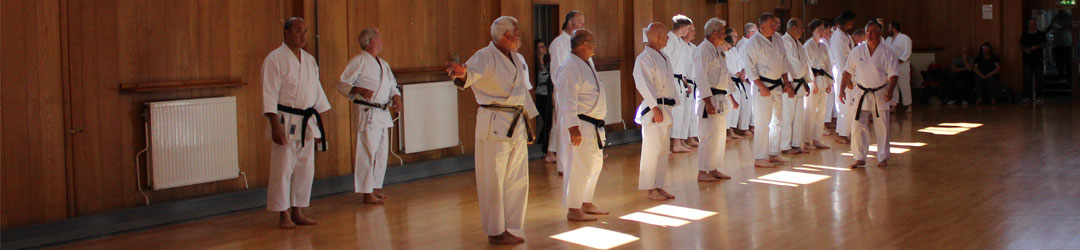
After a thorough warm-up (anyone looking for a daily mobility routine can find one here: https://youtu.be/zSKWqoPlIRw), we moved on to Renraku Waza — an excellent way to raise the heart rate while engaging the mind. Rather than simply running patterns, we took a deeper look at movement and positioning, asking why we move from one position to another and what each transition is trying to achieve. This approach adds intent and forward thinking to the practice, moving beyond repetition towards understanding. After a focused and energetic 15 minutes, we moved on to Kihon Keri Waza.
Working from the current Dan Grade syllabus, we explored the kicking combinations first in solo practice and then, crucially, in pairs. As is often the case, having a partner in front of you changes everything. Changing ma-ai, dealing with resistance, and reacting to another person highlights just how important the arms and upper body are in creating control and position for effective keri waza. Kicking techniques are often thought of as leg-focused actions, but this session reinforced that they are only one part of a much larger, connected system. After more than half an hour on the three keri waza combinations, there was a noticeable improvement when returning to solo practice, informed by the earlier Ōyō work. This also opened the door to looking beyond kihon, including where these ideas appear elsewhere — for example, in Neiseishi Kata, and why the hikite fist does not rotate when pulling during yoko-geri.
We then moved on to Chintō, a kata we practise regularly and continue to enjoy exploring in greater depth. With everyone comfortable in the embusen, the second hour allowed us to focus on the more subtle aspects of the kata. Chintō’s emphasis on dynamic movement, changes of direction, and flowing techniques made it an ideal vehicle for refining these ideas. Particular attention was given to understanding how the centre line (chūshin-sen) is always relative to one’s own position and stance, and how the point of balance may not align exactly with what appears to be the physical centre of the body. These were fine adjustments, but they made a significant difference to the fluidity and stability of transitions throughout the kata.
To bring these lessons into a partner context, we finished with Kumite Kata 4 and then 3. As always, these drills clearly demonstrate how stance transitions and body use underpin effective movement. It is all there if you know where to look. The session provided a full physical and mental workout, moving everyone further along their journey — and, as always, the two hours passed far too quickly.
🎥 2. This Week’s Long-Format Video
PART 16 - YOKOGERI - KERI WAZA - KIHON FUNDAMENTALS: PART 16 - YOKOGERI - KERI WAZA - KIHON FUNDAMENTALS | KIHON FUNDAMENTALS
Watch here:
Watch on YouTube📝 3. Featured Article of the Week
Article: Wadō-Ryū Benkyō — Naihanchi by Roger Vickerman Renshi
Naihanchi Kata: The Hidden Power of Stillness in Wadō-Ryū Karate
Naihanchi (内歩進) — known as Tekki in some traditions — is one of the most misunderstood yet foundational kata in Wadō-Ryū Karate. Performed on a single horizontal line, it shifts the focus away from choreography and towards posture, structure, balance, and internal power at close range. Beneath its compact, sideways movements lies a lifetime of study in stance, breath, alignment, and subtle force generation, forming the structural bedrock for later kata such as Seishan. This article explores Naihanchi as both a technical and philosophical training tool, examining its stance mechanics, internal body use, close-range applications, and historical influences — and why it remains a vital kata for practitioners at every stage of their Wadō-Ryū journey.
📅 4. Upcoming Courses, Events, or Updates
Things you may want to know about:
- The course and events calendar is now live on the website and will be updated regularly — please bookmark it and check it: Courses & Events.
- The May 2026 course dates and location have been confirmed — full details and booking here: May 2026 Course.
- The August 2026 course is now available for booking — full details here: August 2026 Course.
- The October 2026 course is now available for booking — full details here: October 2026 Course.
- Saturday sessions will be running throughout January 2026 — except the 17th January. If you would like to attend a Saturday session for the first time, please get in touch.
🧠 5. Wadō-Ryū Principle of the Week
Yowasa (弱さ) — “Weakness” Used as Strength
Yowasa literally means weakness or softness, and in everyday language it suggests a lack of strength. In Wadō-Ryū, however, the term is used deliberately and paradoxically to describe power that arises from relaxation, non-resistance, and precise timing rather than muscular force.
Yowasa does not mean being ineffective. It is the absence of visible effort, brute force, collision, or telegraphing. To an observer the body feels soft, yet the result is decisive. This reflects Ōtsuka Sensei’s jujutsu-influenced view that true strength does not oppose force, but redirects and settles it.
Yowasa only functions when supported by other core Wadō principles — datsuryoku, ryūsui, shizumu, hadō, and omomi. Without these, what appears to be softness quickly becomes genuine weakness.
You most often encounter yowasa in kihon kumite, kumite kata, and close-range applications, particularly at senior level, where nothing looks forced. It is often recognised by its effect rather than its appearance: “It didn’t feel like anything happened — and yet I was unbalanced or struck.” In simple terms, yowasa is appearing weak so that strength has nothing to collide with — one of Wadō-Ryū’s most subtle bridges between karate and jujutsu. Want to know more, you can read the full article here
🙏 Thank You for Being Part of the Community
If you have any questions, video requests, or feedback, simply reply or get in touch — we read everything.
Wishing you a fantastic week of training,
Roger and The Team
Wadō-Ryū Benkyō
https://wadoryubenkyo.co.uk/